

Recycling alone won’t solve the plastic crisis
High costs, toxic exposure and incompatible materials show why recycling must be paired with reduction and reuse
Recycling alone won’t solve the plastic crisis
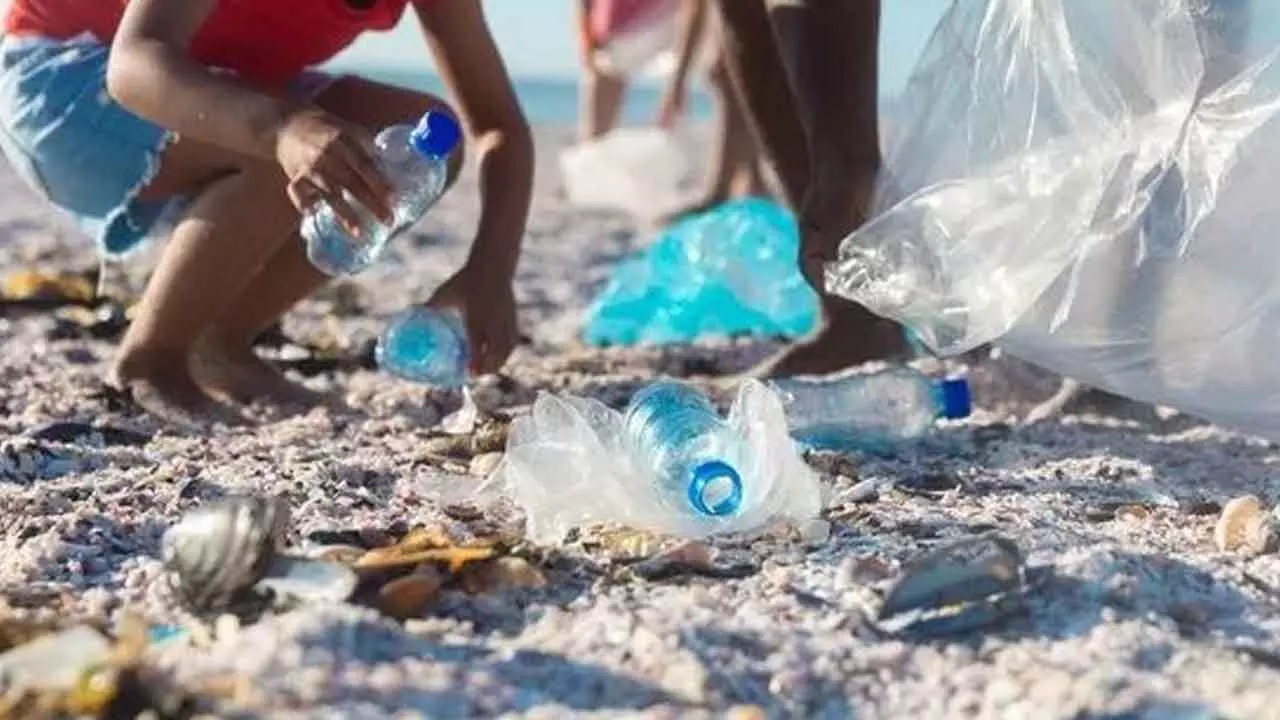
As good citizens, we diligently fill the recycling bins provided by our local authorities with all manner of plastic trays, boxes, bottles and bags. But as these bins fill up quicker and quicker each week, an awkward question arises: is all this effort actually doing any good? Many of us would answer with a sceptically resigned "of course not".
The facts unfortunately, support this increasingly common view. In Europe, only around 15 per cent of plastics are recycled, while in the United States, the figure drops to 9 per cent. The remainder ends up in incinerators, landfills or, in the worst of cases, in the natural environment.
The question we must answer is, therefore, not whether plastic recycling has issues, but why the system we have all trusted for decades is failing so catastrophically.
Problems begin before the bin
To understand what's going wrong, it's worth taking a step back and looking at how we actually use plastic. Around half of all plastics are used for single-use products: containers, packaging, bags, agricultural sheeting and so on.
Between 20 per cent and 25 per cent are used in long-term applications pipes, cables, building materials and the rest is used in consumer goods with an intermediate lifespan, such as vehicles, furniture and electronic devices.
In the EU, post-consumer plastic waste already reached 24.6 million tonnes in 2007, and has only grown since then. Packaging is still the main source, but others such as electrical waste and vehicles at the end of their lives are taking up an increasingly large share. Recycling is failing for many reasons, all of which are interconnected.
Why plastic recycling is failing
We can break the assortment of reasons for this failure and the potential solutions into 12 main points.
1. Inefficient recycling plants
During important processes like cleaning, fragments of plastic are lost as microplastics. This means the system itself creates plastic waste, and we urgently need to rethink the design and operation of these plants.
2. Recycled plastic is expensive
At the moment, virgin plastic is usually cheaper to produce than recycled plastic. Without financial incentives, taxes on virgin plastic or greener public procurement, market forces will keep gravitating towards the cheapest option.
3. Low quality
Polymers degrade, and this limits their potential for reuse. Investing in new sorting, washing and regranulation technologies is key to closing the loop here.
4. Inefficient collection
Losses and pollution start at the source. Optimising collection bins, logistics, incentives is just as important as industrial processing plants.
5. Hidden workforces
In many places, waste collection and sorting are precarious and invisible work. Training, job stability and recognition are not just social issues they also affect efficiency.
6. Workers exposed to dangerous chemicals
People who work with plastic waste are overly exposed to toxic substances. Fixing this is an urgent question of public health.
7. Exporting waste
For decades, wealthier countries have sent their waste to countries with lower environmental management capacities. As well as being an injustice, this is shortsighted, as environmental damage doesn't have any respect for borders.
8. Incompatible plastics
Mixing incompatible polymers drastically reduces the quality of recycled material. Accurate sorting is a critical bottleneck.
9. Overly generic policies
There are no universal solutions here. Recycling policies must be adapted to suit local contexts, infrastructures and consumer habits.
10. Unrecyclable products
Multi-layered products, mixed polymers, complex adhesives and black plastic are just some examples of this. While plastics can be sorted into seven main families, in practice, only PET and HDPE are commonly recycled. Almost all of the rest end up incinerated or in a landfill.
11. Reliance on individuals
Properly separating and cleaning waste and following recycling symbols is a help, but it can't be the only thing we do. Placing all responsibility on the consumer is both unfair and ineffective.
12. Not all waste gets recycled
Impurities such as food scraps, moisture, paper, textiles, metals, or polymer mixtures drastically reduce performance in a recycling plant. The amount that goes in always exceeds the amount that comes out as new material. We can liken this to cooking. When you make, for instance, a vegetable omelette, you invariably produce waste in the form of eggshells and peelings. The same thing happens in recycling, only on an industrial scale.
A collective challenge, not a silver bullet
There is no magic wand we can wave to eliminate all plastic from the planet, but there is enough knowledge to do much better than we are today. Recycling is not a panacea. It is an important but incomplete part of a broader approach that includes reduction, reuse, eco-design and the circular economy.
The question is no longer whether we know what to do, but why we still fail to do it. Technology is advancing, and the problems are clear. What's missing now is not innovation, but the collective will to put words into action.
(The writer is a researcher, nanoscopist, and science communicator at the University of Barcelona, Spain)





